San Sebastián is part of the Basque Country.
The Basques are one of the oldest peoples in Europe.
Over the years, they have developed national pride alongside separatism, and they preserve their ancient cultural traditions to this day.
They have their own flag, language, anthem, traditional clothing, and even their own type of beret.
The Basque language, called Euskara, is considered the oldest language in Europe.
It is defined as an “isolated language,” meaning it is not related to any other language in the world, and its origin is unknown.
The Basques strongly identify with their language and call themselves Euskaldunak—that is, Basque speakers.
In San Sebastián, known in Basque as Donostia, road and street signs appear in both languages—Spanish and Basque.
For many years, San Sebastián (Donostia in Basque) was a small fishing village, but due to its location on a wide bay, it became a thriving trading city during the 16th century, exporting goods to France, England, and the Low Countries.
This made it a target for various armies, including Napoleon’s troops, who destroyed it in 1808. After it was rebuilt, San Sebastián became a resort city for Spain’s wealthy, including Queen Isabella, who built her summer palace there, and General Francisco Franco.
Today, San Sebastián offers visitors a wealth of attractions—culture, art, gastronomy, shopping, and even activities for children.
How to get there
Getting to San Sebastián is usually by rental car. The roads are convenient. Note that signs in the Basque Country will show the Basque name of the city: Donostia, which can be confusing.
Normally, I use Rentalcars.com when I need to rent a car in Europe.
Parking in the city center is difficult, and it’s better to park in central parking lots on the outskirts of the city center and not drive directly into the city center.
Travelers in northern Spain often encounter high demand for cars, and sometimes popular vehicles run out quickly (especially SUVs, vans, and automatic cars), so it is recommended to rent a car as early as possible.
Other options for getting to San Sebastián that may be suitable are flights, buses, and trains.
Those choosing to fly will usually do so on domestic flights, mainly from Barcelona or Madrid.
These flights are very convenient (about an hour and a half), and it is recommended to book tickets in advance.
Those choosing to arrive by bus will usually do so with the comfortable ALSA buses.
It is possible to do so with buses from Barcelona, Madrid, Bilbao (where there are also smaller companies), and Zaragoza.
Notice that these trips can be long (for example, the bus from Barcelona to San Sebastián is a very popular route but takes more than eight hours, so it’s worth being prepared).
One advantage of the buses to San Sebastián is that the central station is very close to the tourist area, and you can get off the bus and start exploring right away.
Where to stay
I highly recommend staying only in the Old Town when visiting San Sebastián.
Parte Vieja is made up of small, winding streets, pedestrian alleys, and the famous Constitution Square (Constitución).
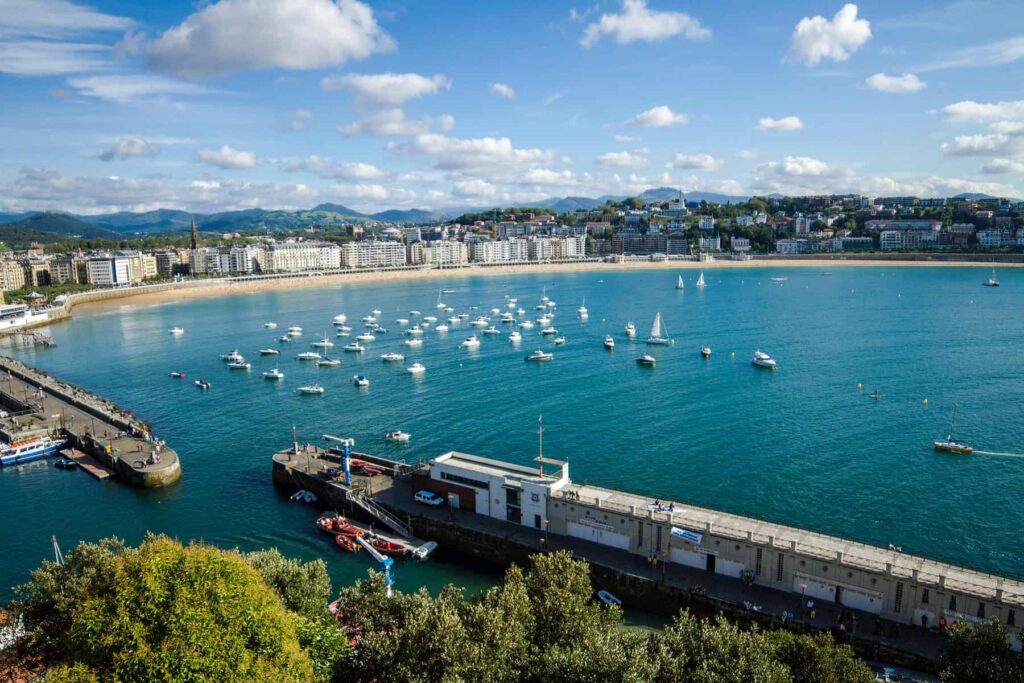
Overall, it’s a narrow and charming area where private cars do not pass. In the Old Town, you’ll find part of the famous bay, a fishing port, and a stunning beach.
Keep in mind that accommodation prices in San Sebastián are usually higher than in the rest of Spain.
Where to eat in San Sebastián
One of the world’s culinary cities, with top-quality ingredients and an unforgettable food culture. A place where everything you eat will be amazing.
La Viña – the place where the Basque cheesecake was invented. Burnt on the outside and creamy on the inside, almost liquid in the center.
The smell that surrounds you when you step inside is simply unbelievable (highly recommended to come when it opens at 11).
Although the next recommendation is for a better cheesecake in my opinion, La Viña is an institution that must not be missed!
Pastelería Oiartzun – a small pastry shop, far from the spotlight, that I entered for a different pastry.
When I asked the seller if there was anything else she recommended, she suggested the cheesecake.
Thank God she did. In my opinion, this is the best cheesecake in San Sebastián.
Not too burnt like its bigger sister at La Viña, this cake is very creamy in the center, smooth and velvety, with an amazing and perfectly caramelized flavor. A must-visit. A dream!
Pintxos (the Basque version of tapas):
La Espiga – a lively pintxos bar, full and with an amazing atmosphere.
Here, as in many bars in the city, you’ll find yourself eating while standing and trying to decipher the menu from the walls—and that’s part of the charm. ֿ
Here I had the best anchovies I’ve ever eaten—wait before you hesitate. Usually, I don’t eat fish like this either, but I found myself devouring a plate in less than half a minute. Huge anchovy fillets, soft as butter, soaked in high-quality olive oil, lots of roasted garlic, and dried peppers. Eat with bread and close your eyes.
I also recommend trying the Pimiento rellenos, a sweet pepper stuffed with a creamy mixture of minced meat and béchamel, coated and deep-fried!
Bar Ciaboga – a local, family-run pintxos bar where tourists rarely go. Here I had two of the tastiest bites I’ve had in all of Spain.
The first, the house specialty, Platillo – cubes of potatoes boiled in water and then fried in plenty of olive oil with piles of garlic, parsley, and flakes of salt.
On the side, there’s cayenne pepper that I recommend sprinkling on top and enjoying. So simple, so good.
The second dish is a potato tortilla (a kind of creamy potato and egg pie, a very famous Spanish dish), and here, it’s the best I’ve had in all of Spain, and there are many kinds—from classic tortilla to one with caramelized onions (crazy good!!) or with spicy peppers, chorizo, and more.
It’s one of Spain’s most iconic dishes, and this is the place to try it!
Sansse Bar – another highly recommended pintxos spot with its own uniqueness.
I highly recommend trying the fresh foie gras (as opposed to the frozen kind we have back home) with onion and apple jam, and their stuffed sweet pepper, which here, instead of being fried, is cooked in a thick pepper sauce!
Casa Urola – an iconic and innovative pintxos bar serving more creative and unique bite-sized dishes, with a menu that always changes according to seasonal ingredients.
I tried and highly recommend the smoked salmon pintxo (served on a small bruschetta in the display case) with a delicate onion salsa and tartar sauce—like biting into butter.
In addition, two iconic dishes that made this place legendary are the fresh artichoke pintxo with almond praline and jamón ibérico, and the seared scallop (coquille Saint-Jacques) served in a cold, refreshing ajo blanco soup made from almonds and garlic, topped with garlic chips and crispy herbs. Excellent!
Bodega Donostiarra Gros – a popular pintxos spot serving a sandwich that embodies everything good about pintxos culture (called completo / la completa, usually not listed on the menu, so you need to ask for it) – a crispy baguette filled with high-quality tuna, pickled anchovies drenched in olive oil, and slightly spicy pickled peppers.
A sandwich that drips all over with every bite. Simple and delicious!
Antonio Bar – a slightly more upscale tapas bar, said to serve the best potato tortilla in Spain (fried for over an hour and a half).
I recommend checking not just the opening hours, but the tortilla serving times, since it’s made only twice a day—and usually sold out before it even leaves the pan!
Michelin:
Elkano – a Michelin-starred grill restaurant ranked as the 16th best restaurant in the world. Elkano specializes in grilling turbot, a flat and relatively rare fish with a variety of textures and types of meat hidden inside.
The special fish is placed in a dedicated iron grill and cooked over hot charcoal until the fins are crispy and crackling, and the fish itself is incredibly juicy and perfectly cooked.
Then Itur, the owner, comes over to carve the fish and explain its different parts—the breast, back, fillet (each with two distinct textures because the turbot swims on its side), even the bone marrow, and more.
A truly unique experience!
Top Things to do in San Sebastian
1/ Strolling through the Old Town and the narrow streets
Parte Vieja (the Old Quarter), located at the foot of Mount Urgull, is a maze of alleys where walking around is an indescribable experience.
While some of the alleys lead to the old port, others climb up Mount Urgull. One moment you’ll be walking down a narrow alley, and the next you’ll find yourself in the spacious Plaza de la Constitución, where the city’s residents once watched bullfights on weekends.
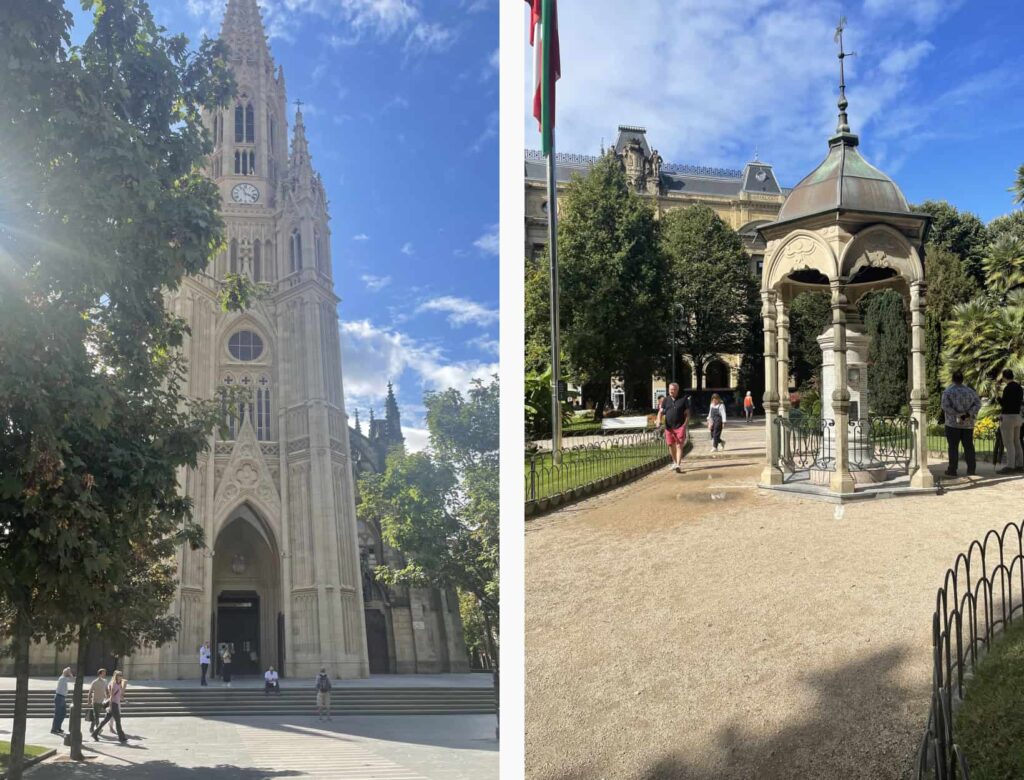
At one end of Calle Nagusia stands Santa María del Coro, with its baroque façade, and at the other end is Buen Pastor, the impressive cathedral.
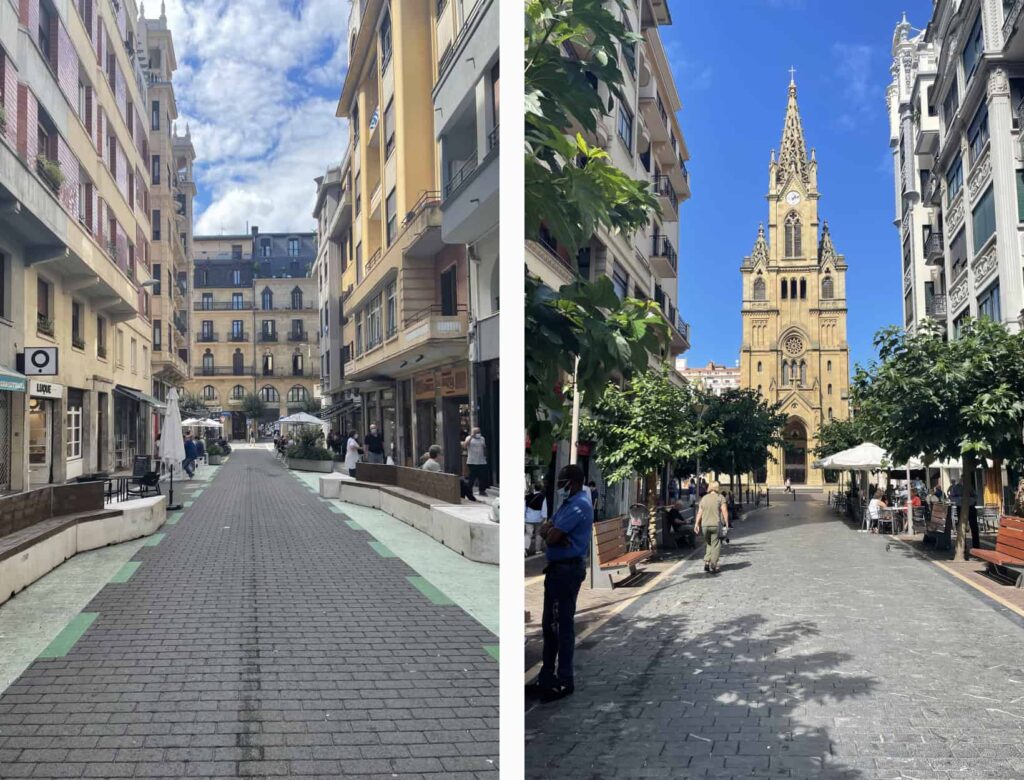
As is typical of a Spanish city, in the morning the Old Quarter moves at a slow pace, and most of the people around are long-time residents going about their daily routines, greeting one another with a smile and occasionally stopping for a chat.
At lunchtime, the tapas bars open, the Old Quarter comes to life, and soon the streets fill with workers on their lunch breaks and cheerful tourists enjoying the special atmosphere.
Although San Sebastián is not a Mediterranean city, the atmosphere there is remarkably Mediterranean.
Both in the Old Town and in the “new” center, there are numerous pedestrian streets closed to car traffic, which makes the movement of pedestrians more noticeable.
Add to that plenty of boulevards lined with green trees (or golden ones in autumn), and you get a city that is very pleasant to stroll around.
If you wish, you can explore the city more interestingly by taking a guided bike tour—a fun and cool way to wander around the city.
2/ Surfing and relaxing on the beach
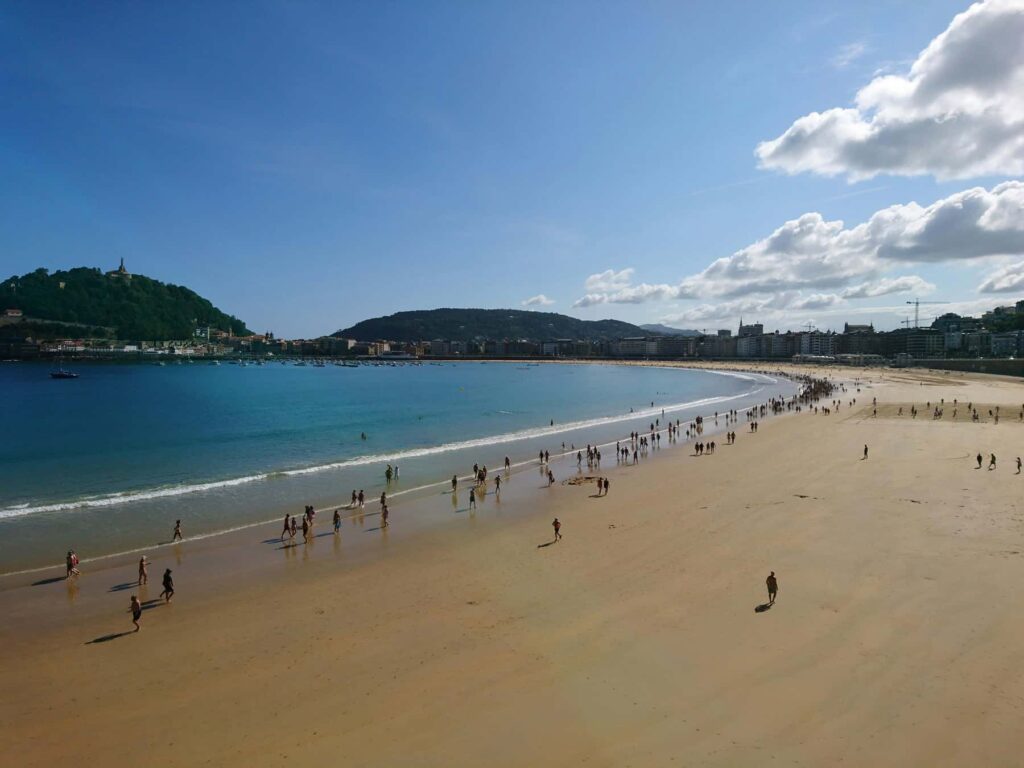
San Sebastián is located on the Bay of Biscay and is surrounded by three mountains and the Urumea River, which divides it in such a way that it appears to have two bays, each with its own beach — La Zurriola Beach and La Concha Beach (Playa de la Concha).
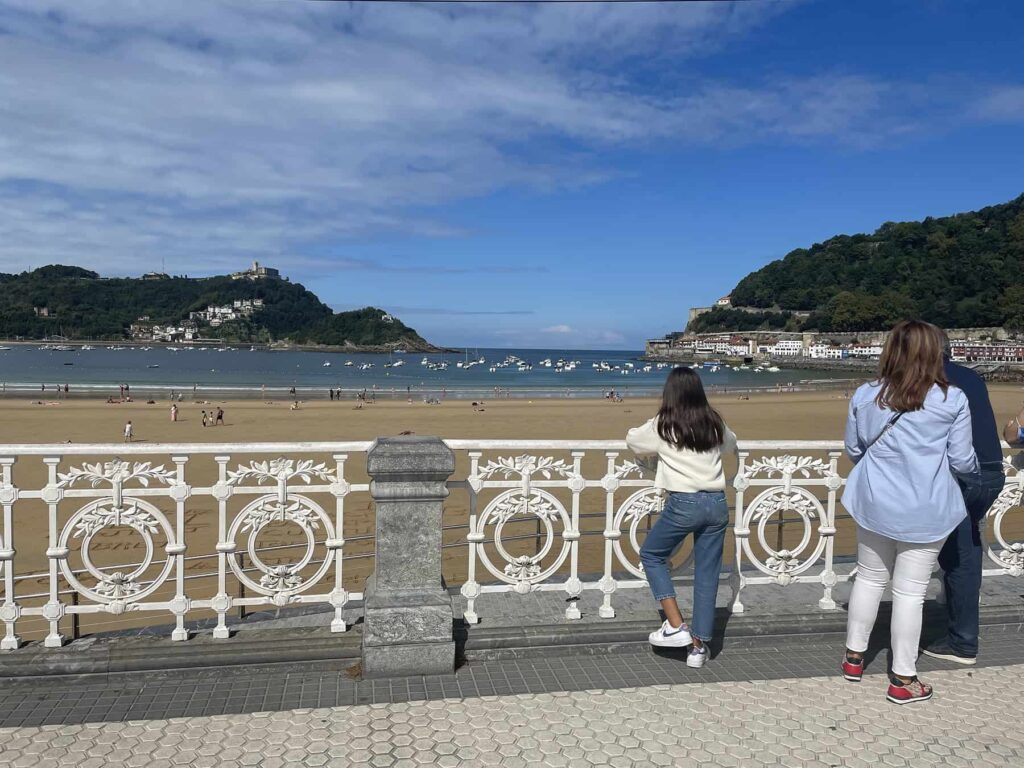
La Concha Beach is considered one of the most beautiful urban beaches in the world. The perfectly shell-shaped bay (hence its name) offers calm waters, golden sand, and breathtaking views of Santa Clara Island and the surrounding hills.
The beach stretches for about three kilometers and provides the perfect place to cool off, sunbathe, or simply take a romantic walk along the promenade.
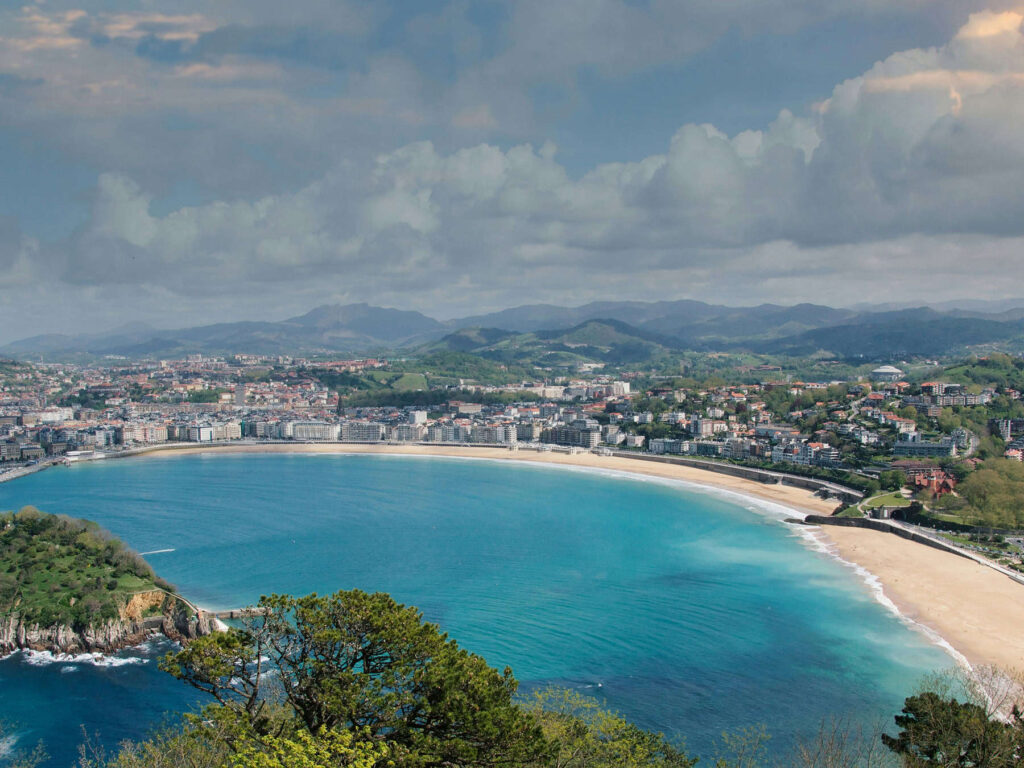
The promenade (Paseo de la Concha) is an attraction in itself, with its iconic white wrought-iron railing that has become a symbol of the city. Along the promenade (which has both an upper section and one adjacent to the beach), you’ll find charming cafés, benches to sit on, and beautiful viewpoints.
At the eastern end of the beach lies Alderdi Eder Park, a small and lovely botanical garden offering a green escape from the crowds of tourists.
The area around the La Concha promenade, with its elegant buildings, is a testament to the period when San Sebastián was the vacation city of Spain’s wealthy and royal families.
One of the main reasons many people visit San Sebastián is to experience its famous waves.
The Spanish Basque Country has two excellent surfing beaches — La Zurriola and Zarautz.
La Zurriola Beach is located right in the city, which is very convenient, though its disadvantage is that it’s relatively small, so on days with good waves, it tends to get crowded.
Zarautz Beach is located in a nearby town of the same name — a charming surfers’ town with a wide and spacious beach.
Keep in mind that it gets very busy in July and August.
Of course, you don’t have to surf – you can simply enjoy the city’s long and beautiful stretch of beach.
3/ Climb Monte Urgull and discover the city from above
Monte Urgull, part hill and part mountain, is located on the eastern side of La Concha Beach, at the tip of the peninsula where the Old Town sits.
The hill offers a perfect combination of nature, history, and breathtaking views. The climb is not particularly difficult and is suitable for all ages, with paths that pass through a dense forest of eucalyptus and pine trees.
At the top of the hill, you will find Castillo de la Mota, a historic 12th-century fortress that once served to protect the city from naval invasions.
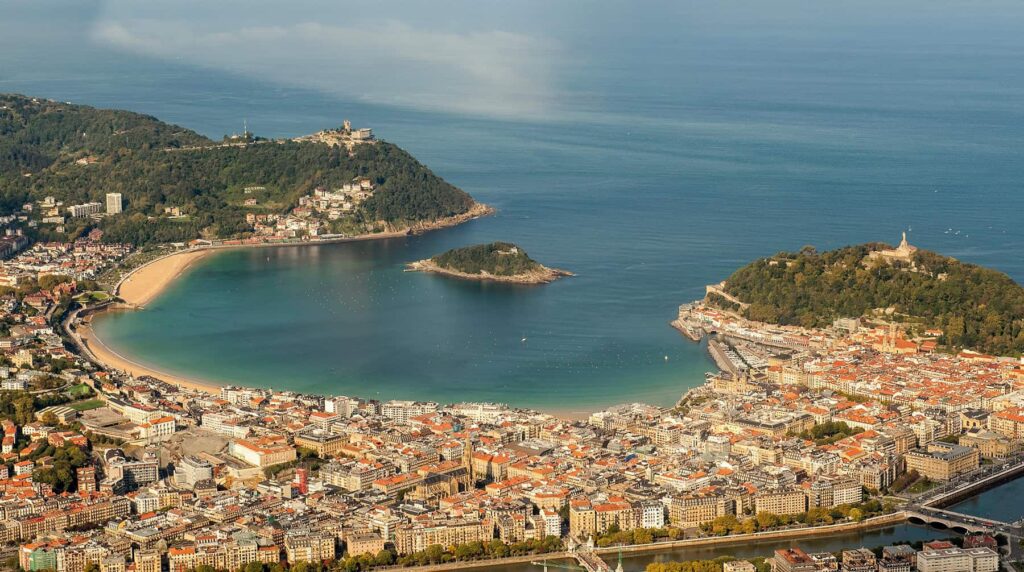
Today, the fortress houses a small museum that tells the military history of San Sebastián.
The highest point of the hill is crowned with a giant statue of Jesus Christ, known as The Sacred Heart of San Sebastián, created by the Spanish sculptor Federico Coullaut, resembling the statue of Jesus in Rio de Janeiro.
From here, you can enjoy a stunning panoramic view of the entire city, the bay, and the beaches. It is a perfect spot for photos and for understanding the geographical layout of San Sebastián.
4/ Walk part of the Camino de Santiago
Irun is the official starting point of the famous Camino de Santiago, and you can do a one-day hike. Take a bus to Irun and then walk back to the city.
If you feel like doing a short trek on foot, the Camino de Santiago trail is a great option.
5/ Visit the local food market or take a food tour
Anyone you ask, from a beginner waiter in one of the pintxos bars to a senior chef in the Michelin-starred restaurants, will say that the success of their dishes depends first and foremost on the quality of the ingredients bought at the local market.
La Bretxa market! No, it’s not Barcelona’s market—it’s a small, covered market inside a shopping complex. But everything you buy here is the freshest, tastiest, and best there is.
Come here in the mornings, buy pastries and baguettes, cheeses, fresh shrimp, mayonnaise, fresh tuna, anchovies, and olives, and make yourself a picnic by the harbor.
The best breakfasts in the world. It’s also a great solution if you find yourself hungry in front of closed restaurants.
Every morning, the chefs of San Sebastián’s restaurants arrive at La Bretxa Market on Alameda del Boulevard, in the eastern part of the Old Town (Monday–Saturday, 24 hours a day; closed on Sundays).
Every tomato, onion, or mushroom is carefully selected, cheeses from mountain farms are tasted with care, and fish and seafood caught at dawn are meticulously sorted—whether they came from the bay or the river, and whether they were caught with a rod or a net.
As befits a Spanish market of its level, the produce is arranged with astonishing precision, and the cleanliness and aesthetics are impressive by any standard.
The first Basque museum, opened in 1902, is located in a magnificent historic building that was once a 16th-century Dominican monastery.
6/ Explore the San Telmo Museum
It is the best place to understand the unique Basque identity. The museum has undergone extensive renovations in recent years and perfectly combines historical architecture with modern glass and metal additions.
The museum’s collections present the history, culture, and art of the Basque region from prehistoric times to the present day.
You will find archaeological artifacts, contemporary art, exhibitions about Basque mythology, and more.
What makes the museum special is the way it presents Basque identity as a living and dynamic one. Interactive and multimedia exhibits allow visitors to understand the local traditions and how they continue to influence modern life.
7/ Take a boat trip to the nearby Santa Clara Island.
The small and charming island that sits in the center of La Concha Bay offers the perfect escape from the bustle of the city.
During the summer months, small boats operate from the port to the island several times a day. The ride is short (about 10 minutes) but enjoyable, offering a unique view of the city from the sea.
The island itself is relatively small and features a cute little beach, short walking trails, and a small restaurant. It is the perfect place for a picnic or a few hours of romantic peace.
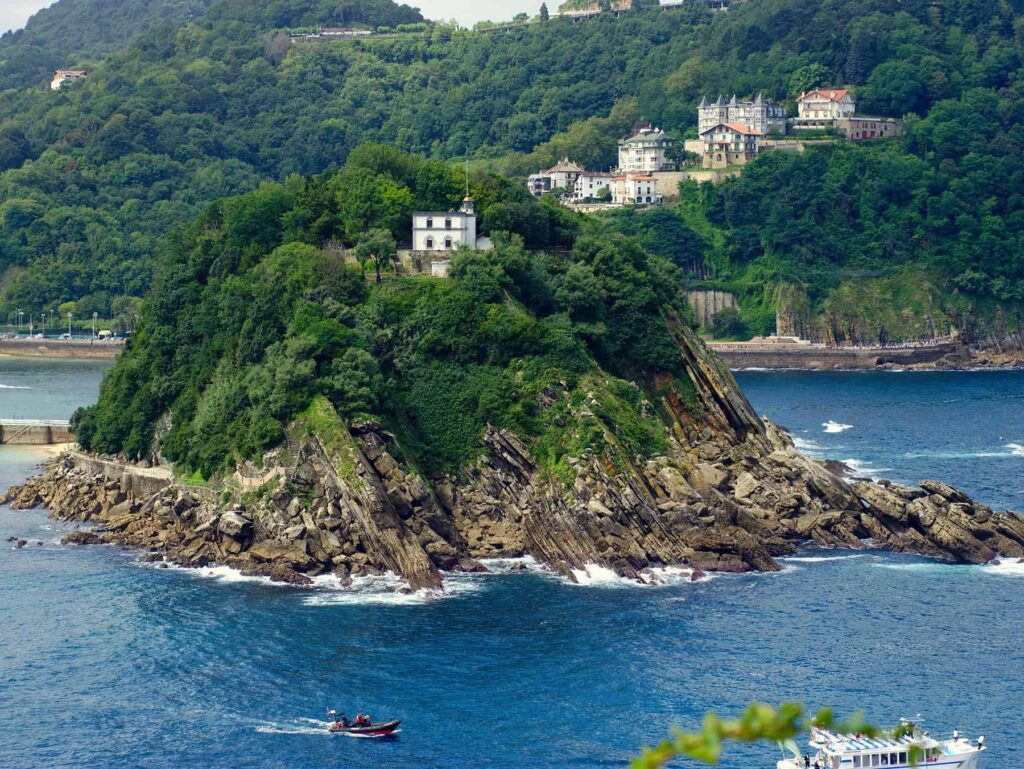
This tiny island, located in the center of La Concha Bay, has only a lighthouse and a small pier, and during the summer it becomes the fourth beach of San Sebastián.
Although rocky and surrounded by cliffs, it is popular among visitors who find the effort worthwhile and appreciate its unique atmosphere. A perfect place for a picnic or a few quiet romantic hours.
The island is connected to the port by a boat service that operates only in the summer.
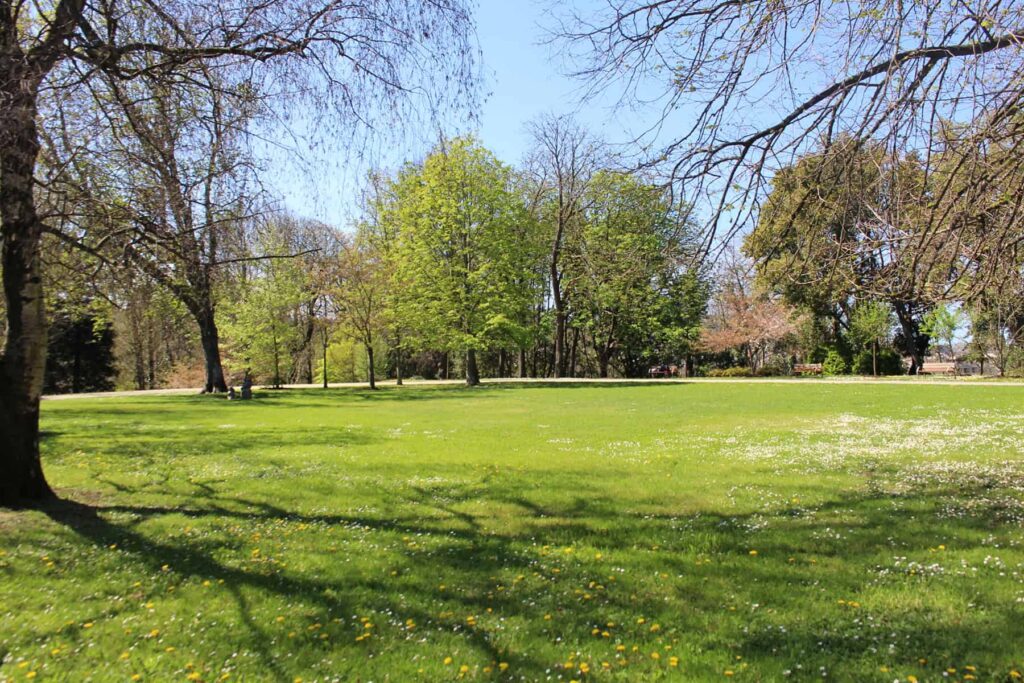
8/ Cristina-Enea Park
Cristina-Enea Park, located in the Egia district, is the largest park in the city.
For many years, neglect in the area erased some of its historical remnants, including a grand measuring house that was once part of a palace where the elite of the Belle Époque lived. The park was donated by its owner, the Duke of Mandas, to the city of San Sebastián.
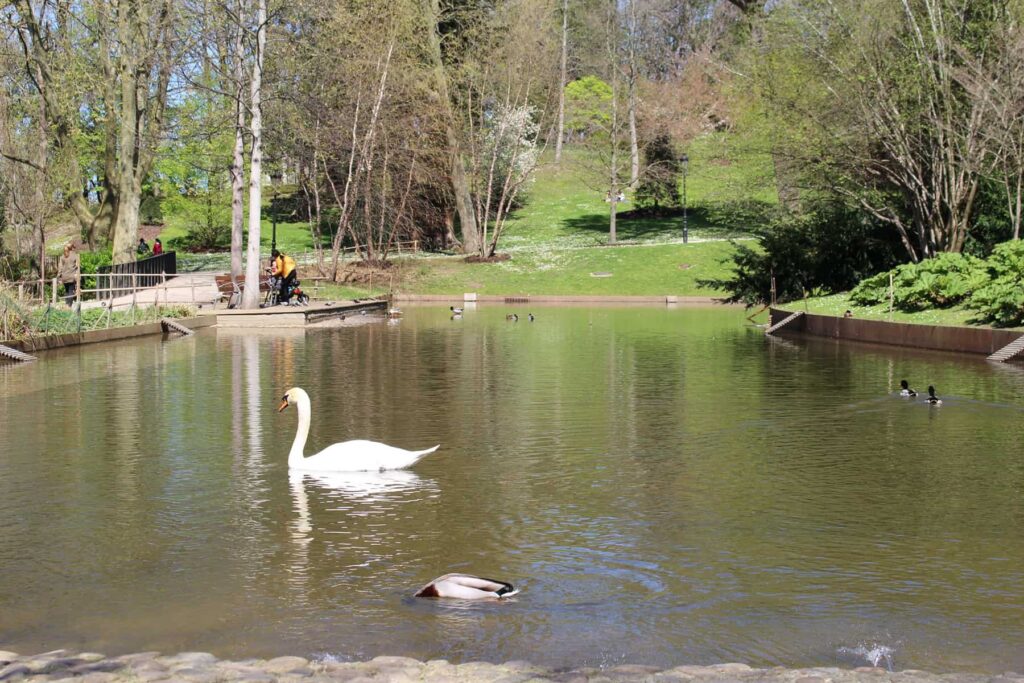
Today, it is a green space in the city center, featuring jogging paths and children’s play areas. The park is surrounded by dense vegetation, and some tree species, such as the impressive ginkgo, have significant botanical value.
9/ Filming location of Game of Thrones – San Juan de Gaztelugatxe
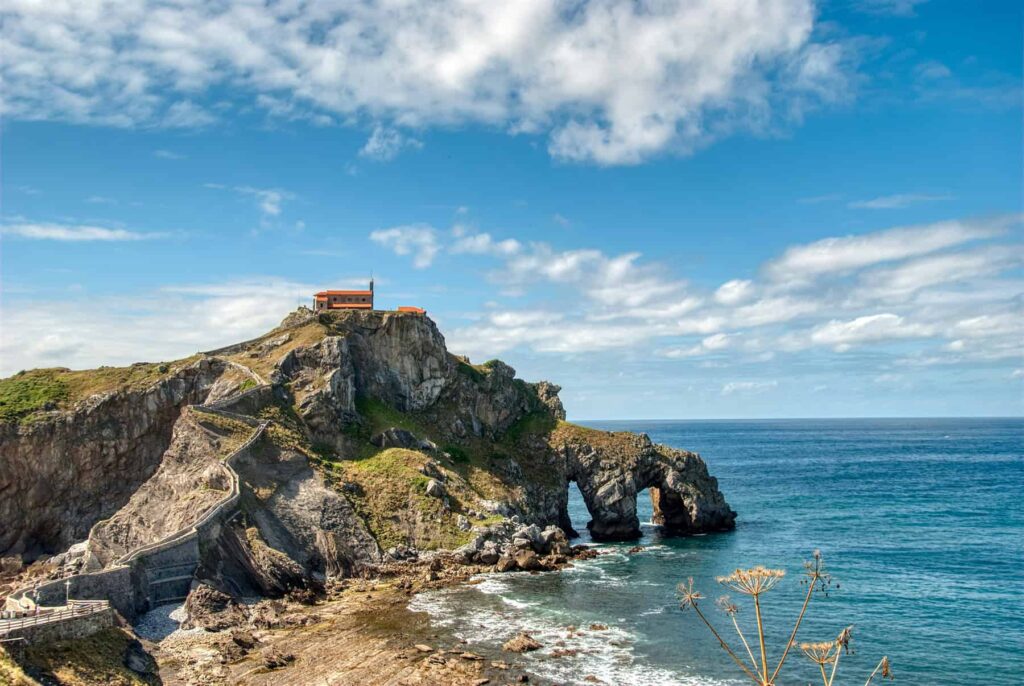
Another amazing place, definitely worth the trip. At the end of a road along sea cliffs, you descend toward the coast to discover a stunning view of a small island in the sea, connected to the mainland by a stone bridge.
On the island stands a solitary monastery and a lighthouse. About an hour’s drive from San Sebastián will get you to the area. You park your car and begin a walk down to the sea. Already halfway, you can see the island and the monastery.
On calm days, you can walk along the bridge and climb up to the monastery.
For Game of Thrones fans, this is where the scene in Season 7 was filmed where Daenerys and Jon Snow meet on Dragonstone!
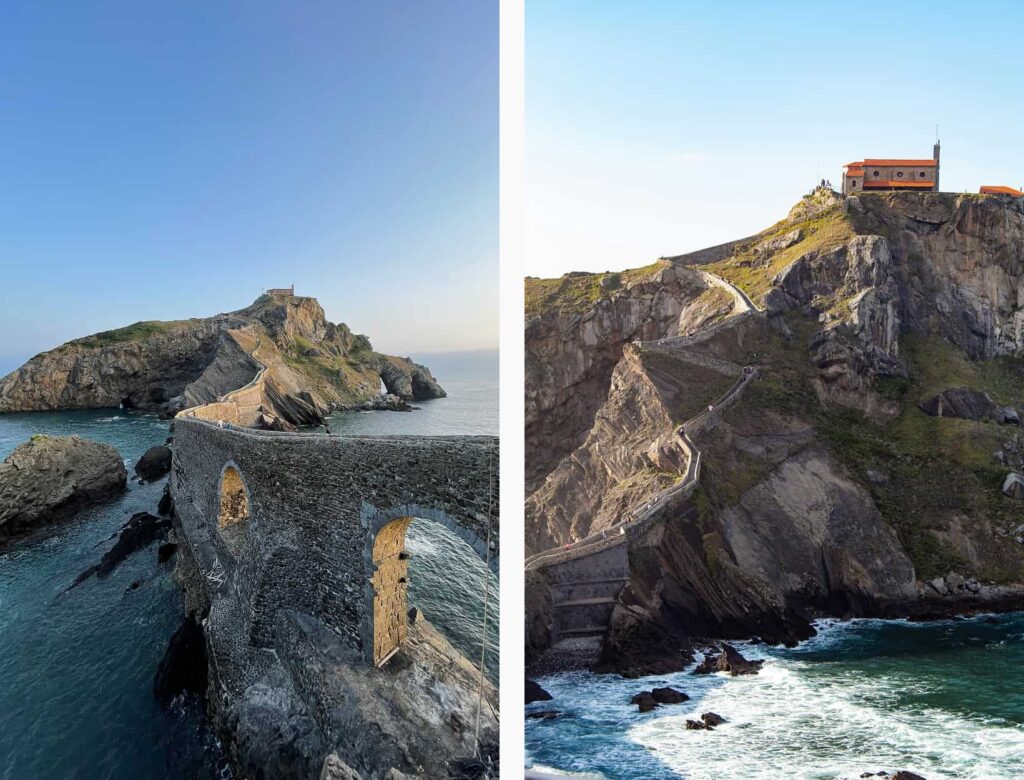
If you visit the site, you can climb 241 steps to reach the church, and legend has it—if you ring the bell three times, you are allowed to make a wish, like hoping Jon Snow or Daenerys will appear miraculously. It probably won’t work, but hey, it’s worth a try.
You can also take an organized tour from San Sebastián, which is a full-day trip including guidance and explanations about the area.
10/ Day trip to Bilbao – Guggenheim Museum
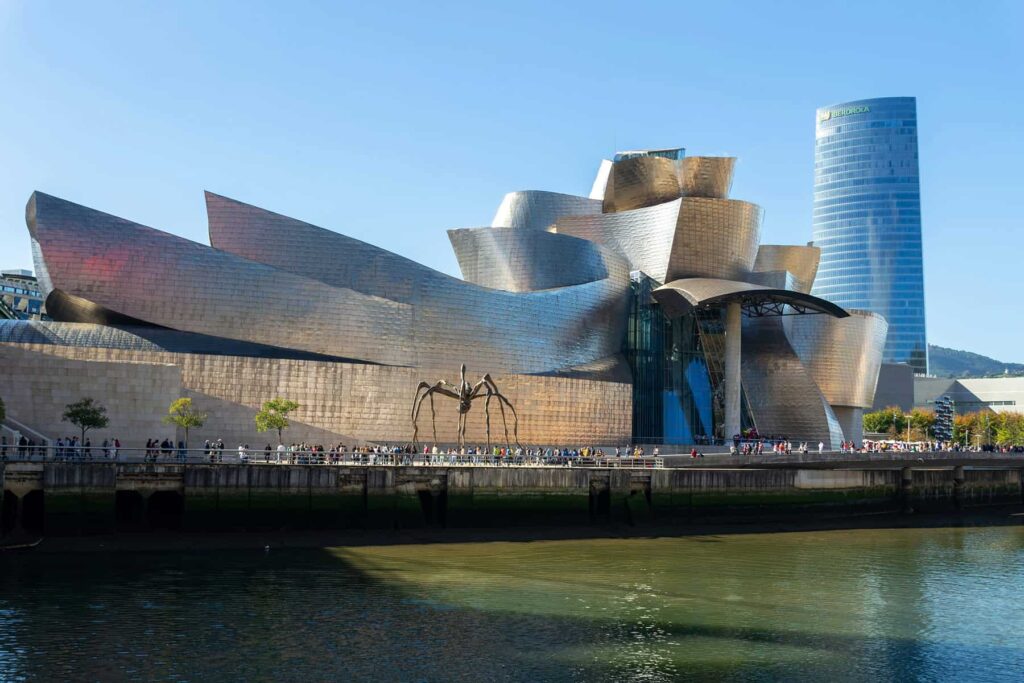
Bilbao is a large and modern city, home to the Guggenheim Museum Bilbao, and an interesting destination for those who love architecture.
In Bilbao, there are beautiful streets in the neighborhood near the river and in the Old Town, and on Sundays, there is a lovely market along the riverbanks.
In principle, it is possible to travel to Bilbao from San Sebastián and back by bus.
The ride takes about seventy minutes, and by train, about two and a half hours.
The Euskotren railway company operates a train every hour, and a ticket costs about ten euros per person. By car, the trip takes about an hour.
11/ Celebrate Festivals in San Sebastián
Aste Nagusia Festival
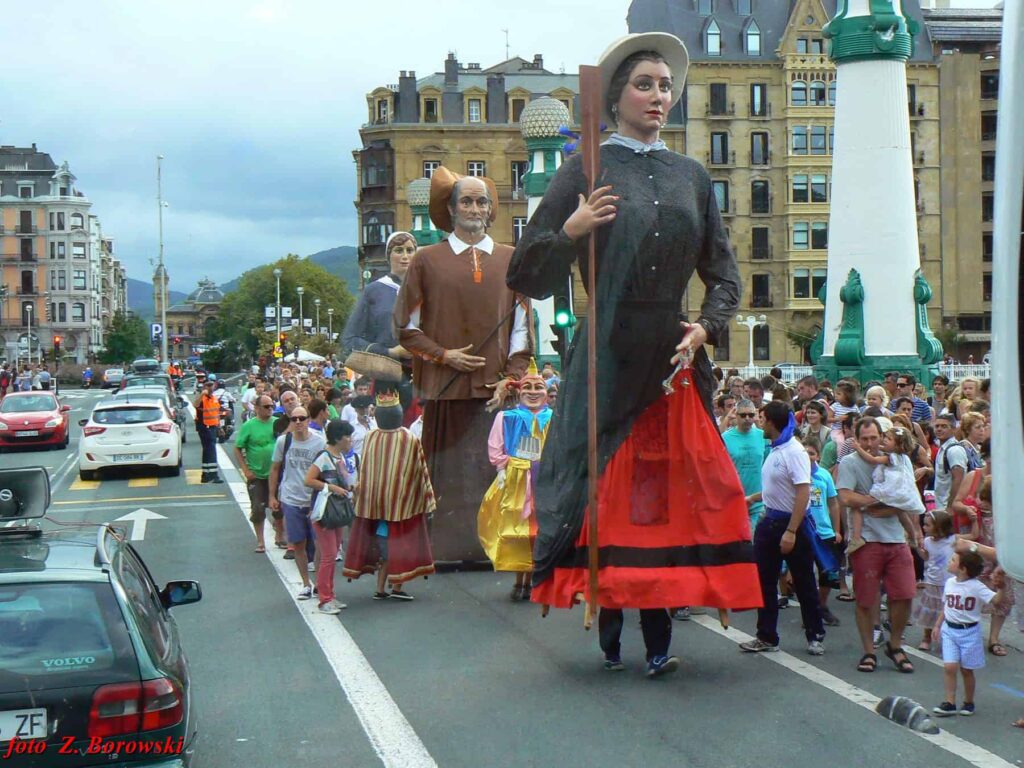
An important festival celebrated every August in San Sebastián is Aste Nagusia (the Big Week).
During the week of August 15, from Saturday to Saturday, locals take to the streets for one of the city’s biggest festivals.
There is an international fireworks competition, parades, live music, food contests, Basque dancing, sports exhibitions, and more.
San Sebastián International Film Festival
The festival takes place in September on the La Concha promenade (Shell Beach) and is considered one of the most prestigious and respected festivals.
Every year, top filmmakers and actors come to compete for the “Golden Shell” (or “Silver,” depending on how well you do).
Who knows, if you’re in the area, you might even rub shoulders with a real movie star.
Thanks for reading my top things to do in San Sebastian!
I hope this San Sebastian travel guide will help you plan your trip, and I am sure you will enjoy San Sebastian – the pearl of the Basque!
Travel resources
Here are some websites I use whenever preparing for my next journey anywhere around the world.
- Book affordable flights on Skyscanner, a great website that shows the best routes and flight deals to your destination.
- Find a budget-friendly deal on all sorts of accommodation types on Booking.com.
- Buy the most flexible and budget-friendly travel insurance at SafteyWing.
- Check the best tours in San Sebastian to maximize your trip.
Read My Other Blogs:
2 weeks road trip around norway
How to plan the ultimate norway road trip
15 most amazing places in Norway
how to spend weekend in Amsterdam
2 weeks in sicily: the perfect sicily road trip
scotland road trip Itinerary for 14 days
Annapurna Circuit Solo: The Detailed Itinerary
The complete guide to solo travel in nepal